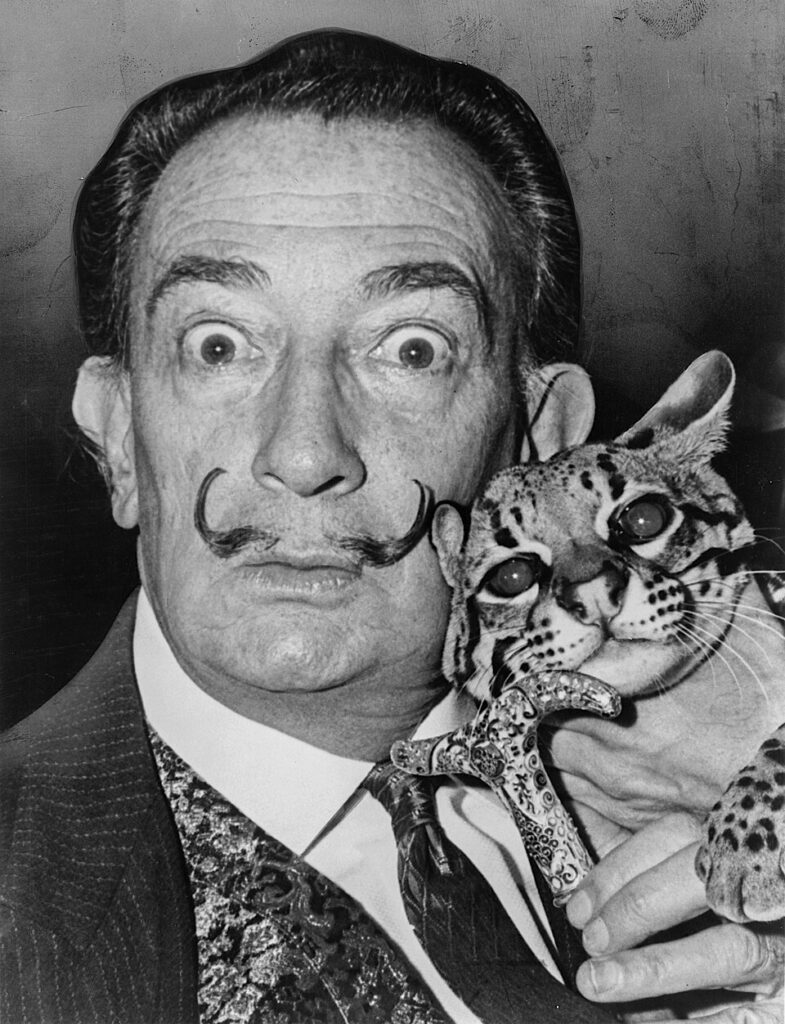

The basics of surrealism
Surrealism in photography is an artistic movement that emerged in the early 20th century, following the surrealist movement launched by André Breton in 1924. Its ambition is clear: to go beyond visible reality to explore the unconscious, dreams, chance and unexpected associations. In photography, this means using a medium considered “objective” to create images that disturb, question and destabilise.
1. The fundamental principle: transcending reality
Photography is often perceived as a faithful record of the world. Surrealism plays precisely with this idea. It is not just a matter of photographing strange scenes, but of transforming reality to reveal a hidden dimension. The aim is to provoke an emotional or psychological reaction in the viewer: surprise, unease, fascination.
Surrealist artists seek to bypass rational logic. They depict impossible situations, objects removed from their context, or absurd combinations. Everyday life becomes mysterious.
2. The influence of dreams and the unconscious mind
Surrealism draws heavily on Sigmund Freud’s theories about the unconscious. Dreams, buried desires and free associations become major sources of creativity. In photography, this translates into symbolic images, enigmatic scenes and dreamlike atmospheres.
For example, a body may float in space, a face may be fragmented or merged with a landscape. Proportions may be altered, perspectives exaggerated. The aim is not to reproduce a dream faithfully, but to recreate its strange logic.
3. Key techniques of photographic surrealism
To create these effects, photographers use various techniques:
- Photomontage: assembling several images to create an impossible scene.
- Overprinting: superimposing several images on the same picture.
- Solarisation: a process that partially inverts the tones of an image.
- Scale and perspective games: visual manipulation to create illusions.
Man Ray is one of the major figures of surrealism in photography. He experimented with rayography (photograms made without a camera) and solarisation, producing images that are both elegant and disturbing.
4. The importance of staging
Unlike documentary photography, surrealism often relies on carefully constructed staging. Objects are chosen for their symbolic potential: mirrors, mannequins, shadows, doors, staircases, masks. Each element can become a carrier of meaning.
Composition plays an essential role. A tight frame can isolate a detail and give it an unsettling dimension. A neutral background can reinforce the strangeness of a subject. The contrast between banality and absurdity is a powerful tool.
5. Surrealism today
Digital tools have greatly expanded the possibilities. Photoshop and other editing software allow for invisible and sophisticated manipulations. However, the spirit of surrealism does not depend solely on technique. It is based above all on an intention: to surprise, to reveal the invisible, to question perception.
Today, many contemporary photographers continue to explore these principles. Surrealism in photography remains a fertile ground for experimentation, where imagination and reality intertwine to create images that challenge the eye and stimulate the mind.